
Live weight Rs. 1,200 per kg
RS,30000
RS,30000
RS,30000
RS,30000
RS,30000
Slaughtering & service charges
بکرہ ذبح کرنے کے پیسے
RS,2000
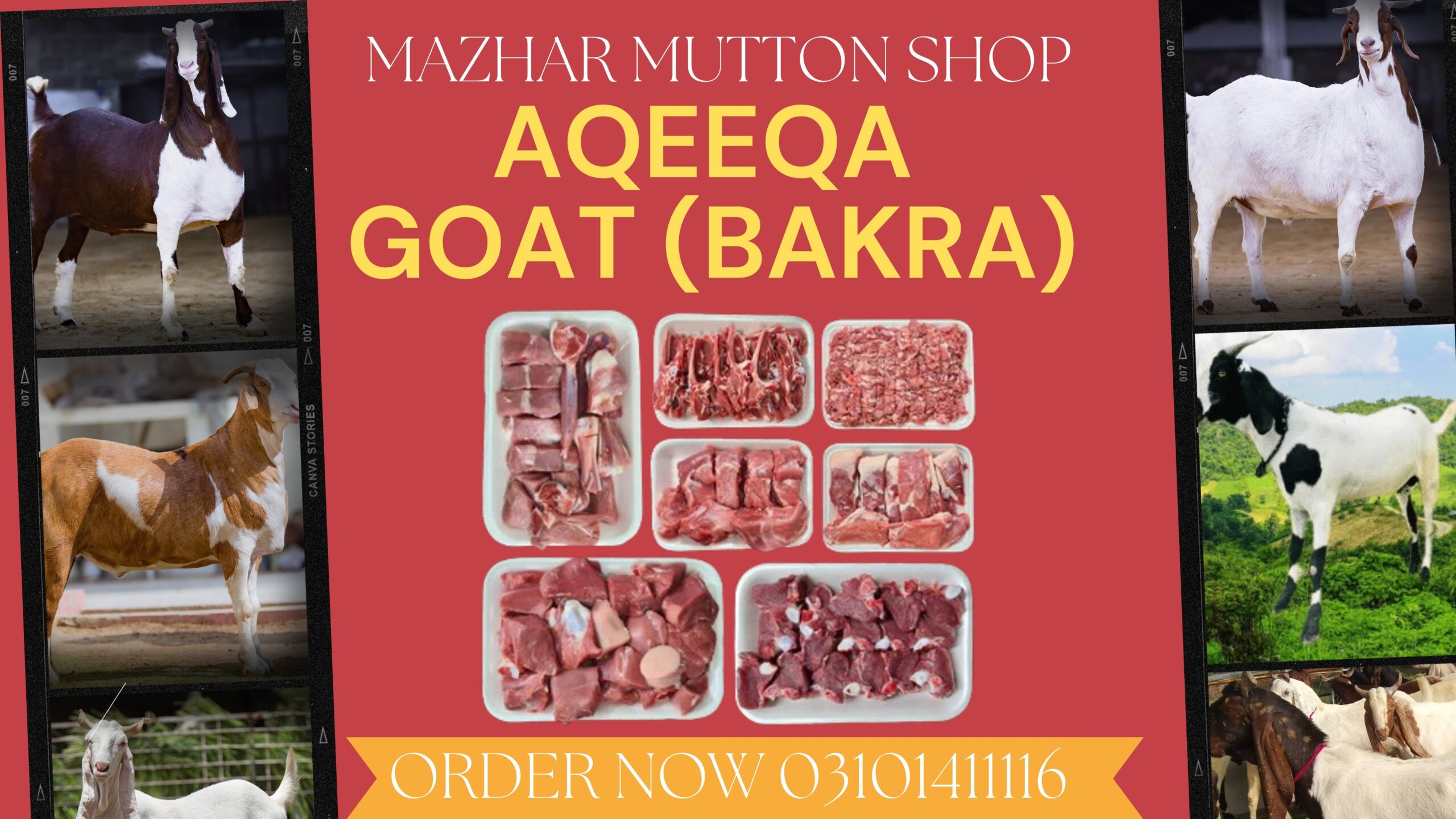
Aqeeqa Goat (Bakra)
- Live weight Rs. 1,200 per kg
- Slaughtering & Service Charges Rs. 2000
- Average weight of the goat varies from 24 to 36 KGs, depending upon the requirements of the customers
- 2 teeth (dhonda) animal will be slaughtered as per the requirements of Sunnah Mubarik
- Pictures & weight of live animal will be provided before slaughtering
- The meat is packed in good and safe packaging and delivered to your doorstep
- If the customer wants the goat to be slaughtered at his home, our representative will come to your home and slaughter it in front of you
عقیقہ (بکرہ)
زندہ وزن روپے 1,200 فی کلو
ذبح اور سروس چارجز روپے 2000
بکرے کا اوسط وزن 24 سے 36 کلو گرام تک ہوتا ہے، جو صارفین کی ضروریات پر منحصر ہوتا ہے۔
2 دانت (دھونڈا) جانور سنت مبارکہ کے مطابق ذبح کیا جائے گا۔
ذبح کرنے سے پہلے زندہ جانور کی تصاویر اور وزن فراہم کیا جائے گا۔
گوشت اچھی اور محفوظ پیکنگ میں پیک کیا جاتا ہے اور آپ کی دہلیز پر پہنچایا جاتا ہے۔
اگر گاہک چاہتا ہے کہ اس کے گھر بکرا ذبح کیا جائے تو ہمارا نمائندہ آپ کے گھر آئے گا اور اسے آپ کے سامنے ذبح کرے گا۔
what is Aqeeqa in islam
Aqeeqah : An Overview of the Islamic Tradition
Aqeeqah is a cherished Islamic practice performed to celebrate the birth of a child. It is considered Sunnah (a recommended practice of the Prophet Muhammad, peace be upon him) but not obligatory. Below are the key aspects of Aqeeqah:
1. Purpose
Aqeeqah serves as an act of gratitude to Allah for the blessing of a child. It is also a means of invoking protection for the child from harm and evil.
2. Timing
Ideally, Aqeeqah is performed on the 7th day after the child’s birth.
If this is not possible, it can be performed on the 14th or 21st day.
Alternatively, it may be done any time before the child reaches puberty.
3. The Sacrifice
An animal, typically a sheep or goat, is sacrificed as part of Aqeeqah.
The recommendation is to sacrifice two animals for a boy and one for a girl.
The animal should meet the same standards as those for Eid al-Adha (Qurbani), such as being healthy and free from defects.
4. Distribution of Meat
The meat from the sacrifice is divided and distributed:
Among family members and friends.
To those in need, as an act of charity.
5. Additional Practices
Shaving the Baby’s Head: It is customary to shave the newborn’s head as part of the Aqeeqah ritual.
Giving in Charity: An amount equivalent to the weight of the shaved hair in silver is given as charity.
Significance
Aqeeqah is a joyful occasion that allows families to express gratitude to Allah, seek blessings for the child, and follow the traditions of Islam. It also reinforces the importance of sharing and helping those in need.
This practice is deeply rooted in Islamic values, emphasizing gratitude, community, and charity